---
title: White Papers
---
Schedule a demo
Log in
[KHARON ClearView](https://open.kharon.com) [KHARON Brief](https://brief.kharon.com)
- [Kharon is](https://www.kharon.com/#kharon-is)
- [Kharon Matters](https://www.kharon.com/#kharon-matters)
- [Kharon in Action](https://www.kharon.com/#kharon-in-action)
- [Kharon QuickView](https://www.kharon.com/#kharon-quickview)
- [Our Team](https://www.kharon.com/#our-team)
# 50-PLUS OFFERING
## In-depth research and sophisticated analytics to address regulatory requirements
###### 
OFAC’s '50 Percent Rule' states that “any entity owned in the aggregate, directly or indirectly, 50 percent or more by one or more blocked persons is itself considered to be a blocked person.”
Companies that don’t appear on a sanctions list, but are majority owned directly, indirectly, or in the aggregate by sanctioned actors, are considered "sanctioned-by-law," and present legal and reputational risk to businesses worldwide.
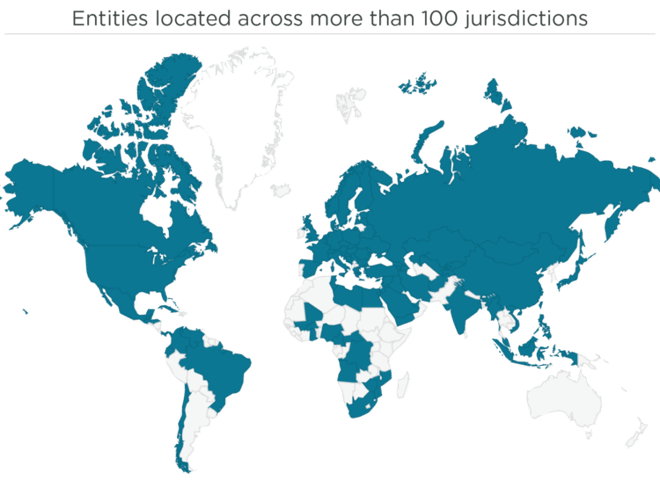
Kharon’s 50-Plus dataset includes thousands of such entities located across 100+ jurisdictions.
Kharon conducts sophisticated, multilingual investigations that utilize all primary source and other reliable documentation, to create the most comprehensive understanding of ownership by sanctioned actors.
### [](https://kharon.com/white-papers/the-us-eu-50-percent-rule-understanding-ownership-rules-regulations-to-better-manage-risk/)COMPLEX OWNERSHIP STRUCTURES
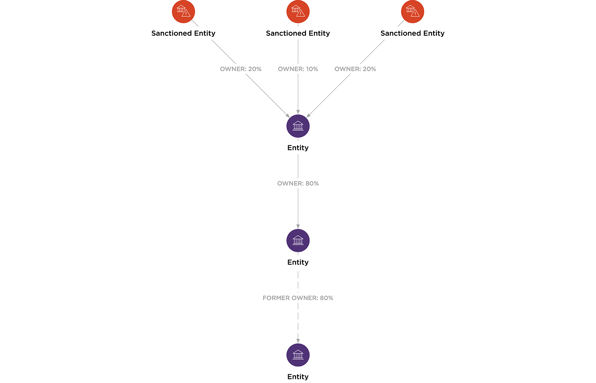
Kharon tackles complex and opaque ownership structures with stakes as low as 1%, analyzing layered ownership chains that traverse multiple jurisdictions.
More than 30% of the companies with majority sanctioned ownership are three or more degrees removed from the sanctioned parent.
Ownership stakes can be dynamic and fractional. Kharon includes entities majority owned in the aggregate by multiple sanctioned parties.
[](https://go.kharon.com/russia?hsLang=en)
###### [](https://kharon.com/white-papers/kharon-white-paper-global-shipping-maritime-industry-the-increasing-complexity-of-sanctions-on-the-risk-control-framework/)DIVERSE INDUSTRY EXPOSURE: THE INCREASING COMPLEXITY OF SANCTIONS ON THE RISK CONTROL FRAMEWORK
Sanctioned-by-law" companies exist across a diverse array of industries and geographies. Kharon’s 50-Plus dataset provides unparalleled coverage for screening against sanctioned-by-law and shadow entities.
---
###### [](https://kharon.com/white-papers/managing-sanctions-related-risk-in-venezuela-state-owned-enterprises-corruption-narcotrafficking-and-beyond/)MANAGING SANCTIONS-RELATED RISK IN VENEZUELA: STATE-OWNED ENTERPRISES, CORRUPTION, NARCOTRAFFICKING, AND BEYOND
The U.S., EU, and other nations have stepped up sanctions pressure on Venezuela’s Nicolas Maduro and his inner circle for engaging in human rights abuses, political repression, widespread public corruption, and narcotics trafficking at the highest levels of government. This review demonstrates several common typologies of Venezuela sanctions-related risk through a series of case studies that help inform effective decision-making and risk control frameworks.
[](https://cta-redirect.hubspot.com/cta/redirect/6869887/667779ac-6d4b-4bea-8c03-feaa532bddad)
---
###### [](https://kharon.com/white-papers/regulatory-policy-guidance-on-managing-sanctions-related-risk/)REGULATORY & POLICY GUIDANCE ON MANAGING SANCTIONS-RELATED RISK
In this white paper, Kharon examines sanctions-related risk typologies addressed in recent guidance and statements from U.S. regulatory and enforcement bodies. This review informs risk management controls consistent with increasing expectations by regulators for more expansive use of data, technology, and network analysis to detect financial crime and other high-risk activity.
[](https://cta-redirect.hubspot.com/cta/redirect/6869887/5fa4bce1-f5d6-4e20-b2dd-0b47fa0e7197)
### Contact us
#### Telephone:
+1 (424) 320-2977
#### Email:
[info@kharon.com](mailto:info@kharon.com)
#### Follow us:
Privacy Policy Terms of Use
Kharon
Copyright © 2026 Kharon
# How do I get started?
To learn more about Kharon or to commission an evaluation of your institution’s sanctions-related risk profile, please complete the following form.
# Kharon Privacy Policy
Last Updated: May 1, 2018
Kharon is a platform provided by 1nteger, LLC (“we,” “us,” or “our”). This Privacy Policy describes the collection and use of personal data maintained on the Kharon platform (the “Platform”), as well as our collection and use of personal data in connection with any other website or other online service that links or refers to this Privacy Policy (collectively with the Platform, the “Services”). This Privacy Policy does not apply to other products or websites, including any other products or websites of 1nteger, LLC or its affiliates.
Please read this Privacy Policy carefully. By using our services, you consent to the practices we describe in this Privacy Policy. If you do not consent to the practices described in this Privacy Policy, you should not use our Services.
The Services may provide links to other websites or services. Please be aware that we do not control the data collection, use, and disclosure policies of those other services. You should exercise caution when accessing such services, and should read their privacy policies in order to understand what information they collect about you, how they use it and to whom they disclose it.
### Kharon Platform
The personal data in the Platform derives from a variety of publicly and/or commercially available third-party sources, including without limitation government publications and documents (such as U.S. and international sanctions and watch lists, court records, and indictments), corporate and nonprofit records, books and news media, and regulatory filings.
This personal data is available for use by authorized Platform subscribers in connection with their compliance requirements and other internal business purposes. Subscribers are subject to contractual restrictions on their use of Platform data. Subscribers are advised that they should do independent checks to verify the accuracy of data, that they are responsible for their own business decisions, and that they should not draw inferences based solely on the inclusion or exclusion of an individual or entity in the Platform.
We have in place processes designed to maintain the accuracy of the personal data in the Platform. Due to the nature of the Platform, however, such data may become outdated or contain errors.
To notify us of errors, please contact us at [data@kharon.com](mailto:data@kharon.com). We may request supporting information or documentation to help us evaluate your request that we correct an error. Each request will be evaluated on its own merits.
### Collection of Information
In addition, when you visit or use the Services, we may collect information about you and the computer or device you use to access the Services in a variety of ways:
- You may provide us information directly, such as your name, e-mail address, and login credentials.
- We may collect information about you when you use the Services, including through the use of cookies, web beacons, and other technologies. Examples of the type of information we may collect with these technologies include your browser type and operating system, IP address and/or device ID, and your behavior on the Services, such as the amount of time spent viewing particular web pages.
- We may receive information about you from publicly and commercially available sources.
### Use of Information
We may use the information we collect about you for various purposes, including:
- To provide you with products, services, or other materials you request.
- To communicate with you about our products, services, and promotions, including to provide you with notices about your account.
- To manage and improve our products, services, and offerings, including analyzing the use of the Services and customizing your experience with the Services.
- To protect the security and integrity of the Services.
- To enforce our legal rights.
### Sharing of Information
We may disclose your information in the following circumstances:
- We may share personal data among our affiliated companies.
- We rely on third-party service providers to perform contractual services on our behalf. To do so, we may need to share your information with them.
- There may be instances when we disclose your information to other parties to comply with the law or respond to legal process or a request for cooperation by a government entity, to prevent fraud or verify and enforce compliance with the policies or terms governing the Services, to protect the rights, property, or safety of us or our respective affiliates, customers, users, or employees.
- We may disclose your information to a third party in the event we sell or transfer all or a portion of our business or assets to a third party.
- We may share your information when you consent to or request such sharing.
As noted above, authorized subscribers have access to personal data in the Platform. In addition, we also may share with third parties data that is not linked to an identified individual or device, such as information that has been aggregated with other records.
### Protection of Information
We have implemented technical, administrative and physical measures intended to secure your information. Although we take steps to protect your information, no website, Internet transmission, computer system or wireless connection is completely secure.
### Cookies, Web Beacons, and Other Technologies
We, as well as certain third parties that provide content or other functionality on the Services, may use cookies, web beacons and other technologies on our online Services.
- Cookies. A cookie is a small file that may be stored on your computer or other device. It enables the entity that put the cookie on your device to recognize it across different websites, services, devices, and browsing sessions. Please click the “Help” menu of your browser to learn more about how to change your cookie preferences.
- Web Beacons. Web beacons and similar technologies are small bits of code that are embedded in web pages, ads, and e-mail that communicate with third parties. We may use web beacons, for example, to count the number of users who have visited a web page and to understand usage patterns.
- Other Technologies. There are other local storage and Internet technologies, such as Local Shared Objects (also referred to as “Flash cookies”) and HTML5 local storage, that can be used to store information about your activities and preferences across different services and sessions. For information about disabling or deleting information contained in Flash cookies, please click [here](https://helpx.adobe.com/flash-player/kb/disable-local-shared-objects-flash.html).
### Users Outside the United States
Please be aware that information you provide us may be processed and transferred to the United States and be subject to the laws of the United States. The data protection laws in the United States may not be equivalent to laws in your country of residence.
### To Contact Us
If you have any questions, comments, or concerns with this Privacy Policy, please contact us as follows: [info@kharon.com](mailto:info@kharon.com)
### Changes to This Privacy Policy
This Privacy Policy was last updated on January 3, 2017. We may update this Privacy Policy from time to time. If this Privacy Policy changes, the revised Policy will be posted on the Services. Your continued use of the Services constitutes consent to any such changes, so please review the Privacy Policy periodically.
# Online Terms of Use
These Terms of Use (“Terms”) govern usage of the websites and online services that link or refer to these Terms (the “Services”). These Terms are a legal contract between you and 1nteger, LLC (“we,” “us,” or “our”) so it is important that you review them carefully before using the Services. Your use of the Services indicates that you agree to follow and be bound by the Terms.
We may update these Terms from time to time without notice to you. You should review these Terms from time to time because their terms are binding on you, and your use of the Services constitutes your acceptance of them. If you do not agree to the Terms, you may not use the Services.
If your organization signed an Order Form or Master Services Agreement with 1nteger, LLC, that agreement may have modified these Online Terms of Use in certain respects. Please contact your organization’s administrator for details.
1. ### SCOPE
The Services may contain generally accessible areas as well as areas that require a subscription. The Terms govern all areas of the Services.
2. ### TRADEMARK INFORMATION
1nteger logos and product and service names (including without limitation the Kharon logos and product and service names) are trademarks of 1nteger, LLC (the “Marks”). Without our prior permission, you agree not to display or use in any manner the Marks. Other logos, product and service names are the property of their respective owners, as may be indicated on the Services.
3. ### NO RESALE OF SERVICE
The content on the Services is protected by copyright, trademark, database and other intellectual property rights. We hereby grant you a nonexclusive, nontransferable and revocable license to use the generally accessible areas of the Services for personal use only and subject to the Terms. You must not copy, transmit, modify, distribute, make available to the public or create any derivative works from any of the content that you find on the Services for commercial purposes without first obtaining our consent to do so.
4. ### PROPRIETARY RIGHTS
You acknowledge and agree that the Services and any application programming interfaces (“APIs”) and software provided, used, or made available in connection with the Services (“Software”) may contain proprietary and confidential information that is protected by applicable intellectual property and other laws. You further acknowledge and agree that content and information presented to you through the Services is protected by copyrights, trademarks, service marks, patents or other proprietary rights and laws. Except as expressly authorized by us, you agree not to modify, rent, lease, loan, sell, distribute or create derivative works based on the website or the Software, in whole or in part. Software, if any, that is made available to download from the Services is the copyrighted work of 1nteger, LLC and/or its suppliers.
You may not (and may not allow any third party to) copy, modify, create a derivative work of, reverse engineer, reverse assemble or otherwise attempt to discover any source code, sell, assign, sublicense, grant a security interest in or otherwise transfer any right in the Software. You agree not to modify the Software in any manner or form, or to use modified versions of the Software, including (without limitation) for the purpose of obtaining unauthorized access to the Services. You agree not to access the Services by any means other than through the interface that is provided by us for use in accessing the Services. Any rights not expressly granted herein are reserved.
5. ### PROHIBITED CONDUCT
You agree that you will not use the Services for any purpose that is unlawful or which could interfere with or impair the operation and functionality of the Services. Without limitation to the foregoing and for illustrative purposes, you agree not to:
- use, intentionally or unintentionally, the Services or any of content therein, in a manner that constitutes an infringement of our rights or the rights of other users or third parties or that is contrary to or in violation of any applicable international, national, federal, state, or local law, rule, or regulation having the force of law.
- modify, merge, copy, reproduce, download, export, duplicate, store, disseminate, distribute, transfer, display, disassemble, reverse engineer, tamper with, or otherwise attempt to decrypt or derive content, source code, any trade secrets or any proprietary information or create any applications or any derivative works thereof, or otherwise exploit the Services or any portion thereof, without our prior written authorization;
- attempt to gain unauthorized access to the Services or the server on which the Services are stored or any server, computer or database connected to the Services; or attempt to circumvent any restrictions imposed on your use or access of the Services.
- use any robot, spider, other automatic software or device, or manual process to monitor or copy content, or use any framing techniques to include any portion of the Services, without our prior written authorization;
- use any network monitoring or discovery software to determine the site architecture, or extract information about usage, individual identities, or users;
- make any use of the trademarks, service marks, trade names, logos, and graphics accessible via the Services without our prior written authorization;
- collect or use any information made available through the Services for any purpose not expressly authorized by us.
- engage in any other conduct that restricts or inhibits any other person from using or enjoying the Services; or
- take any action that violates or threatens our system or network security.
Without limitation to the foregoing, you agree when using the Services to refrain from downloading, transmitting, or otherwise using copyrighted material of which you are not the copyright owner or information that will breach applicable laws or regulations, including data protection or privacy laws.
In addition to the above, you agree that you are bound by, and will comply with, all local laws, regulations and rules to which you are subject. Violation of these Terms may result in civil or criminal liability. We may investigate violations of these Terms and work with law enforcement authorities to prosecute users who violate these Terms.
6. ### NOTICE OF INFRINGEMENT AND ERRORS
If you believe that your work has been copied and is accessible on the Services in a way that constitutes copyright infringement, please contact us at [data@kharon.com](mailto:data@kharon.com) with information about the copyrighted work claimed to have been infringed and identification of the allegedly infringing material on the Services that is requested to be removed. We may request additional information or documentation to help us evaluate your request, and each request will be evaluated on its own merits. To notify us of errors with any content, please contact us at [data@kharon.com](mailto:data@kharon.com). We may request supporting information or documentation to help us evaluate your request that we correct an error. Each request will be evaluated on its own merits.
7. ### THIRD PARTY LINKS
Where the Services contain links to other websites and resources provided by third parties, these links are provided for your information only. We have no control over the contents of those sites or resources, and accept no responsibility for them or for any loss or damage that may arise from your use of them.
8. ### INFORMATION WE PROVIDE THROUGH THE SERVICES
By using the services, you accept the information provided on the services is provided to you “as is.” We assume no responsibility for the timeliness, deletion, improper delivery, or failure to store any user communication or personalization setting. The material displayed on the services is provided without any guarantees, conditions or warranties as to its accuracy. To the extent permitted by law, we and third parties connected to us hereby expressly exclude:
(A) ALL CONDITIONS, WARRANTIES AND OTHER TERMS WHICH MIGHT OTHERWISE BE IMPLIED BY STATUTE, COMMON LAW OR THE LAW OF EQUITY; AND
(B) ANY LIABILITY FOR ANY DIRECT, INDIRECT OR CONSEQUENTIAL LOSS OR DAMAGE INCURRED BY ANY USER IN CONNECTION WITH THE SERVICES OR IN CONNECTION WITH THE USE, INABILITY TO USE, OR RESULTS OF THE USE OF THE SERVICES, ANY WEBSITES LINKED TO IT AND ANY MATERIALS POSTED ON IT, INCLUDING, WITHOUT LIMITATION ANY LIABILITY FOR: LOSS OF INCOME OR REVENUE; LOSS OF BUSINESS; LOSS OF PROFITS OR CONTRACTS; LOSS OF ANTICIPATED SAVINGS; LOSS OF DATA; LOSS OF GOODWILL; WASTED MANAGEMENT OR OFFICE TIME; OR FOR ANY OTHER LOSS OR DAMAGE OF ANY KIND, HOWEVER ARISING AND WHETHER CAUSED BY TORT (INCLUDING NEGLIGENCE), BREACH OF CONTRACT OR OTHERWISE, EVEN IF FORESEEABLE. WITHOUT LIMITING THE FOREGOING, IN NO EVENT SHALL OUR AGGREGATE LIABILITY FOR ANY CLAIM ARISING OUT OF OR IN CONNECTION WITH THE SERVICES EXCEED ONE HUNDRED U.S. DOLLARS ($100.00).
9. ### INDEMNIFICATION
You agree to defend, indemnify and hold us, our partners, employees and agents harmless from and against any and all claims, actions, suits or proceedings, as well as any and all losses, liabilities, damages, costs and expenses (including reasonable attorney’s fees) arising from or connected with any information you submit, post, or transmit through the Services, your use or misuse of the Services, your violation of these Terms of Use, or your violation of any rights of another person or entity.
10. ### TERMINATION
We reserve the right to terminate your access to the Services or account for any reason including, without limitation, violation of applicable laws or breach of these Terms of Use. You agree that any termination of your account may be effected without prior notice. You further acknowledge that we will not be liable to you for any termination of your access to or use of the Services.Sections 3, 4, 5, and 10-13 of these Terms shall survive termination.
11. ### JURISDICTION AND APPLICABLE LAW
These Terms and your use of the Services shall be governed by the laws of New York without regard to its conflicts of laws principles. Any legal action or proceeding related to the Services shall be brought exclusively in a federal or state court of competent jurisdiction sitting in New York.
12. ### SEVERABILITY
If any provision of these Terms is held to be unlawful, void or unenforceable, then such provision shall be severable without affecting the enforceability of all remaining provisions. We reserve the right to alter or delete materials from the Services at any time at our discretion.
13. ### VARIATIONS
We may revise these Terms at any time by amending this page. Any changes to the Terms will be effective as of the date they are posted on the Services. You are expected to check this page from time to time to take notice of any changes we have made, as they are binding on you. Some of the provisions contained in these Terms may also be superseded by provisions or notices published elsewhere on the Services.
The Terms of Use were last updated January 3, 2017.
14. ### QUESTIONS
If you have any questions or concerns, please contact us at: [info@kharon.com](mailto:info@kharon.com).